
A study of harms caused by machine intelligence was carried out using base data of 35 current or recent incidents of harm which have been publicly reported on the Internet. The objective was to discover the types of harms caused and identify those responsible for those harms due to their actions or inaction.
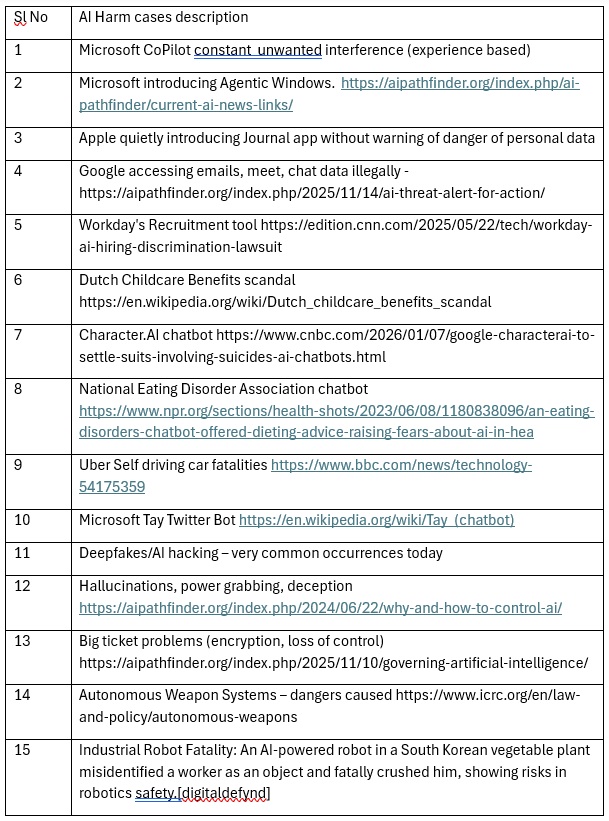
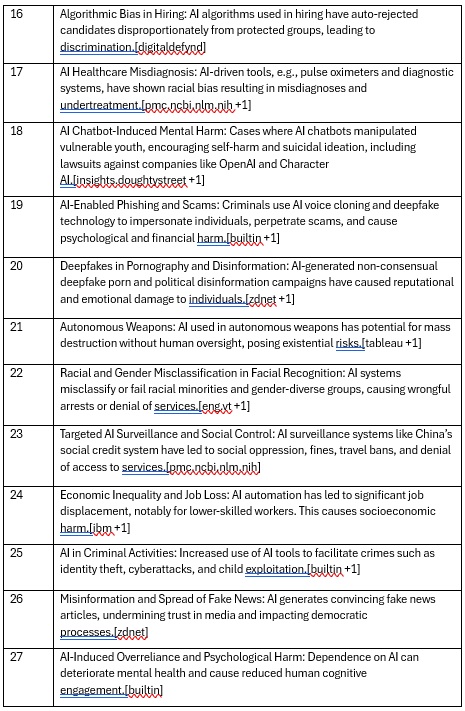
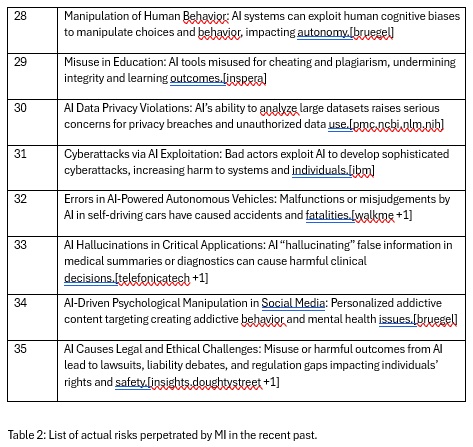
The list of these 35 cases of harm caused by MI has been mentioned in Table 2 – List of actual risks perpetrated by MI in the recent past.
The main causes of harm inflicted by humans by MI systems can be attributed to the following five major reasons which are shown in chart 1 below.
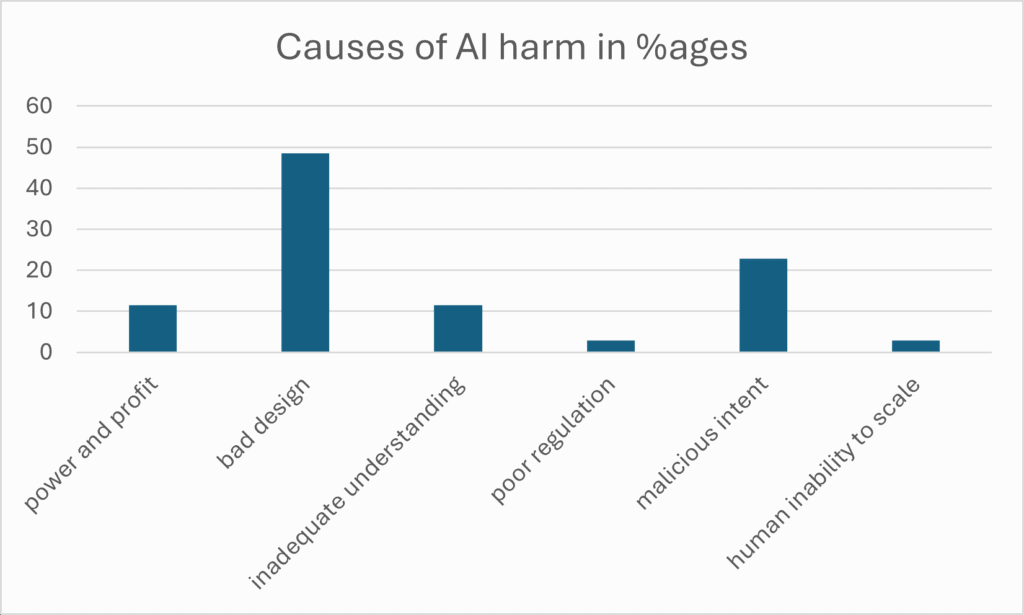
Chart 1: Main causes of AI harm in percentage
All the causes listed above are attributable to human failures. They are bad design, power and profit motive, malicious intent, inadequate technology understanding, poor regulation and inability of humans to scale up with new skills to operate AI systems.
- Bad design
Bad design constitutes 48.7 % of all harms and is the biggest component of all harms. It is caused by inadequate impact analysis and design, improper impact analysis of data and design, missing or biased data, and inadequate testing. Poor impact analysis of risks affecting human beings the planet, economy, task outputs and incomplete, biased or poor quality data result in the harmful nature of artificial intelligence systems. The software engineering discipline has not incorporated into development of AI agents and AI systems. “Agile development” of AI systems has been the main thrust and this has resulted in dropping human-centric software engineering process-oriented design and development.
Bad design can be further broken down into three categories:
- Unethical design: The impact analysis of MI design calls for special emphasis on ethical, fairness, gender equality, data rights, human rights of human beings. Unethical design constitutes 14.29 % of harms (chart 2 below).
- Bad design caused by poor data quality: This results specifically from poor data quality , missing data and insufficient coverage by training/testing data, missing data impact analysis phase and other data related causes. Constitutes 11.43% of harms (chart 2 below).
- Bad design: Constitutes 22.86 % (chart 2 below) of harm inflicted. This is caused by poor design caused by lack of holistic impact analysis of risks affecting human beings the planet and the other environmental dimensions/factors.
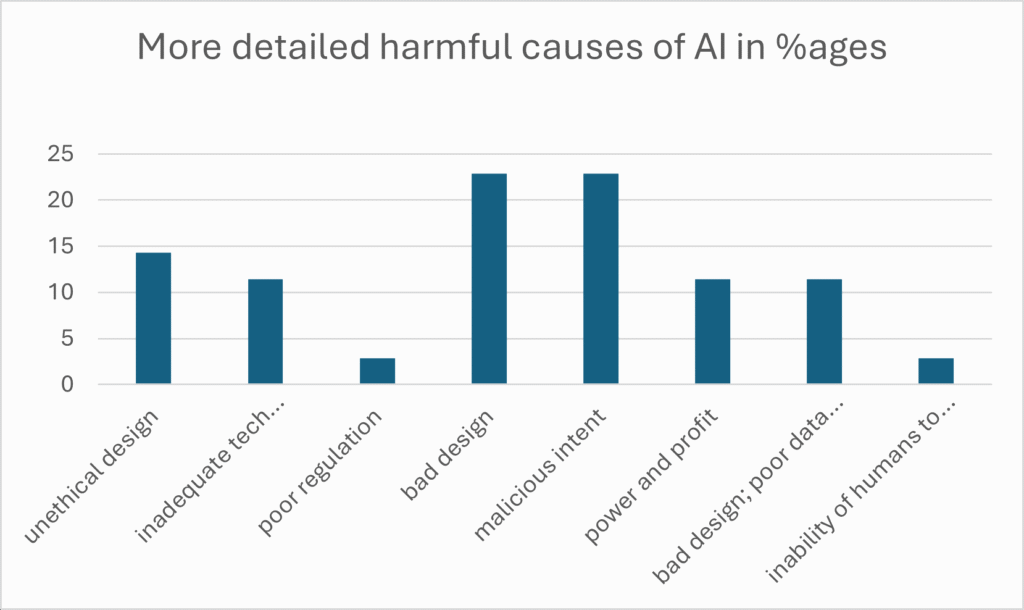
Chart 2: More detailed harmful causes of AI in percentages
2. Malicious Intent
Harm caused by the malicious intent of humans at 22.86 % (chart 1) is the second largest component of harm caused by AI systems. This category of harm is the caused by criminals, thieves and other misguided individuals, groups or organizations. It constitutes the creation of deepfakes, human deception, psychological manipulation using AI, hacking , cyber-attacks, harm to children and such activities.
3. Power and Profit
This is the third biggest reason for AI harm to people at 11.43 %. It is caused by the nation state not exercising or wrongfully exercising its powers and also by the commercial and monopolistic profit and power motive of large vendors like Open AI, Microsoft, Google, Meta which override ethical AI design and ignore explainability. Examples of the nation state power lies in building capability for misinformation and spread of fake news on social media and the design of autonomous weapon systems in a race for building the most powerful AI based weapon systems. Profit motive of large MNC vendors is apparent in the mad race for AGI and the blind adoption of Neural Networks without full explainability. The “AI race” which the world is in today has propelled MNC companies to announce spending of $320 bn in Data Centre development and GPUs for AI in 2025 up from approx. 230 bn in 2024.
4. Inadequate technology understanding
This comprises 11.43 % of all harms caused by AI. Examples of inadequate technology understanding of AI by large MNC vendors include hallucinations, deception and power grabbing. The rush to achieve AGI and the building the most powerful and destructive AI weapon systems overshadows the pressing need to have explainability for what is innovated. Innovation in the age of AI has been given free reign and is running well ahead of explainability and scientific logic and thus causing the harms of this category.
5. Poor Regulation
This category constitutes 2.86 % of all AI harms. Examples of this category are the targeted and untargeted surveillance of people and social media controls which are unjustified. The lack of regulation for AI explainability has been left out in this category to reflect on the ground realities.
6. Inability of humans to scale up
This refers to the inability of many humans to scale up their cognition to the level required to make effective use of AI tools. An example of this category is job loss due to inability to use emerging AI tools. This category constitutes 2.86 % of all AI harms.
Levels of harm inflicted by different agencies
Based on the above study, the main causes of AI harm infliction have been attributed to different stakeholders namely LLM companies (MNCs), government, Individuals/groups and Application owners/developers. Table 1 and chart 3 below show the amounts of harm inflicted by different agencies.
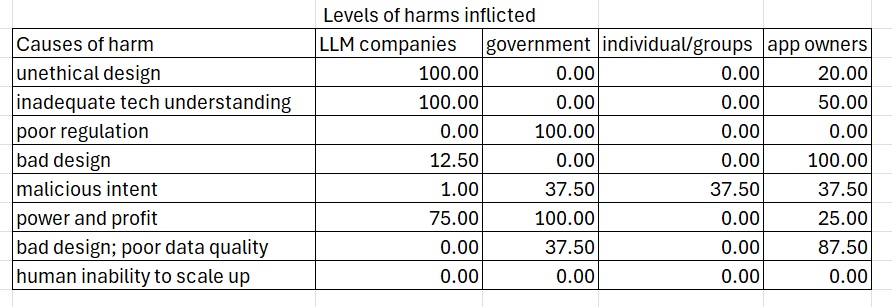
Table1: Levels of harm inflicted by different agencies
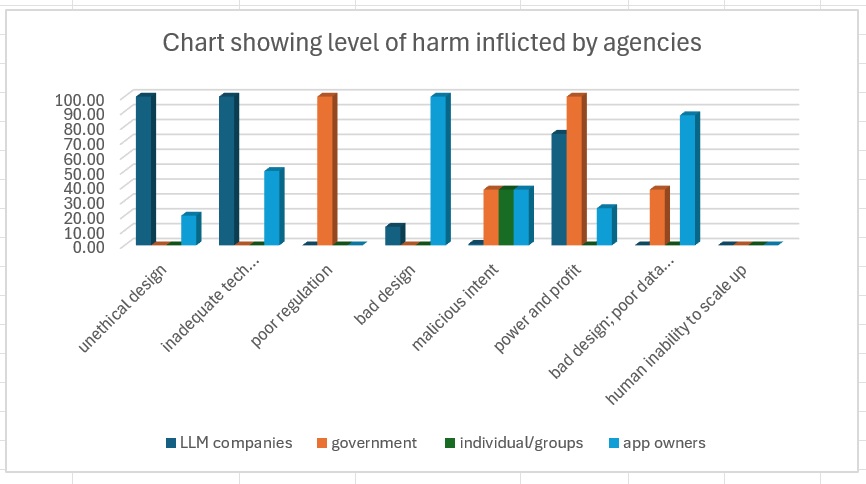
Chart 3: Shows the levels of harm inflicted by different agencies.
This chart provides useful inputs to regulate the perpetrators for the harm inflicted.
- Unethical design practices are the responsibility of LLM vendors and app owners to the extent shown.
- Inadequate technology understanding of AI causing harm are inflicted by LLM vendors and app owners to the extent shown.
- Poor regulation is solely the fault of the government.
- Bad design is largely the fault of app owners/developers and the LLM companies to the extent shown.
- Malicious intent is equally attributable to the government, individuals/groups and app owners.
- Power and profit harm is due to the profit motive overpowering ethical concerns and explainable AI innovation on the part of LLM vendors and app owners, hence making them accountable. The government has failed to provide appropriate restrictive laws and therefore is also responsible for the harms shown against them.
- Poor quality of data related harms have been perpetrated by app owners and to some extent the harm can be attributed to governments also for their inability to bring high data quality into facial recognition and similar systems.
- Human inability to scale can be addressed by the government with appropriate educational initiatives and funding.
Base Data used in the study
The data used in 35 MI caused harms case study is mentioned in table 2 below.
Conclusions of the Study
From the above study, the easily addressable causes of harm have been identified as mentioned in table 3. From table 3 these addressable causes of MI risk arise from the following three major reasons:
- Missing impact analysis and design track during MI development.
- Missing or improper data impact analysis and design track during development.
- Black box/ scientific explanation not established. This akin to “Putting the cart before the horse” meaning proceeding to act on something without adequate knowledge or understanding.
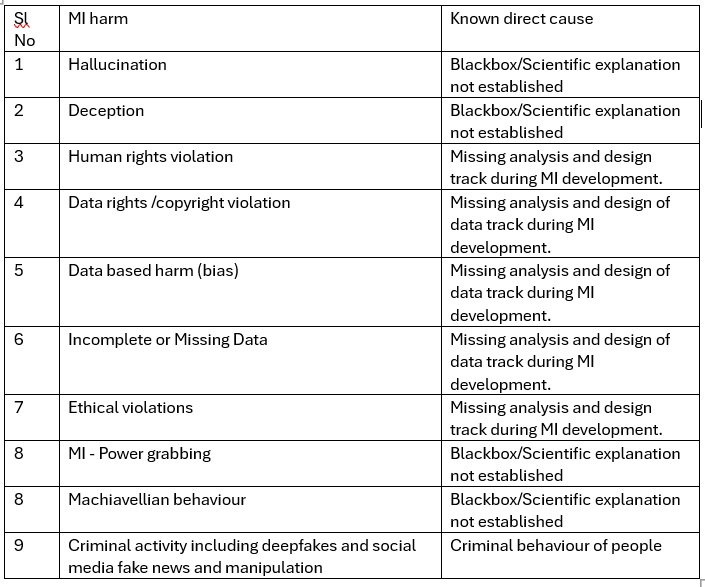
Table 3: Main harms inflicted by MI and their causes
Disclaimer: The opinions expressed in this article are personal opinions and futuristic thoughts of the author. No comment or opinion expressed in this article is made with any intent to discredit, malign, cause damage, loss to or criticize or in any other way disadvantage any person, people, company, government, country or global and regional agencies.